
Home · Energy Stories · Nov 26, 2026 · 5 min read
Energy Stories · Nov 26, 2026 · 5 min readThe Shandong Enquiry: When a Willing Buyer Runs Into the Licensing Question
A willing buyer, a real enquiry — and the licensing question that decided it. Teapot refiners and Venezuelan crude run into import licensing long before price matters.
The message arrived overnight from Qingdao, written in careful English by a sourcing agent who signed himself Mr. Liang.
November 26, 2026 • 7 min read
Editor’s Note
Editor's note: The following is an illustrative scenario, not a report of a Moniphy transaction, client or verified vessel movement. People, companies, vessels and events are fictional. Moniphy Energy & Commodities acts solely as an independent facilitator; it does not take title to, store, transport or sell commodities, and makes no guarantee of product availability, pricing or deal completion. Nothing here is legal, sanctions or trading advice.
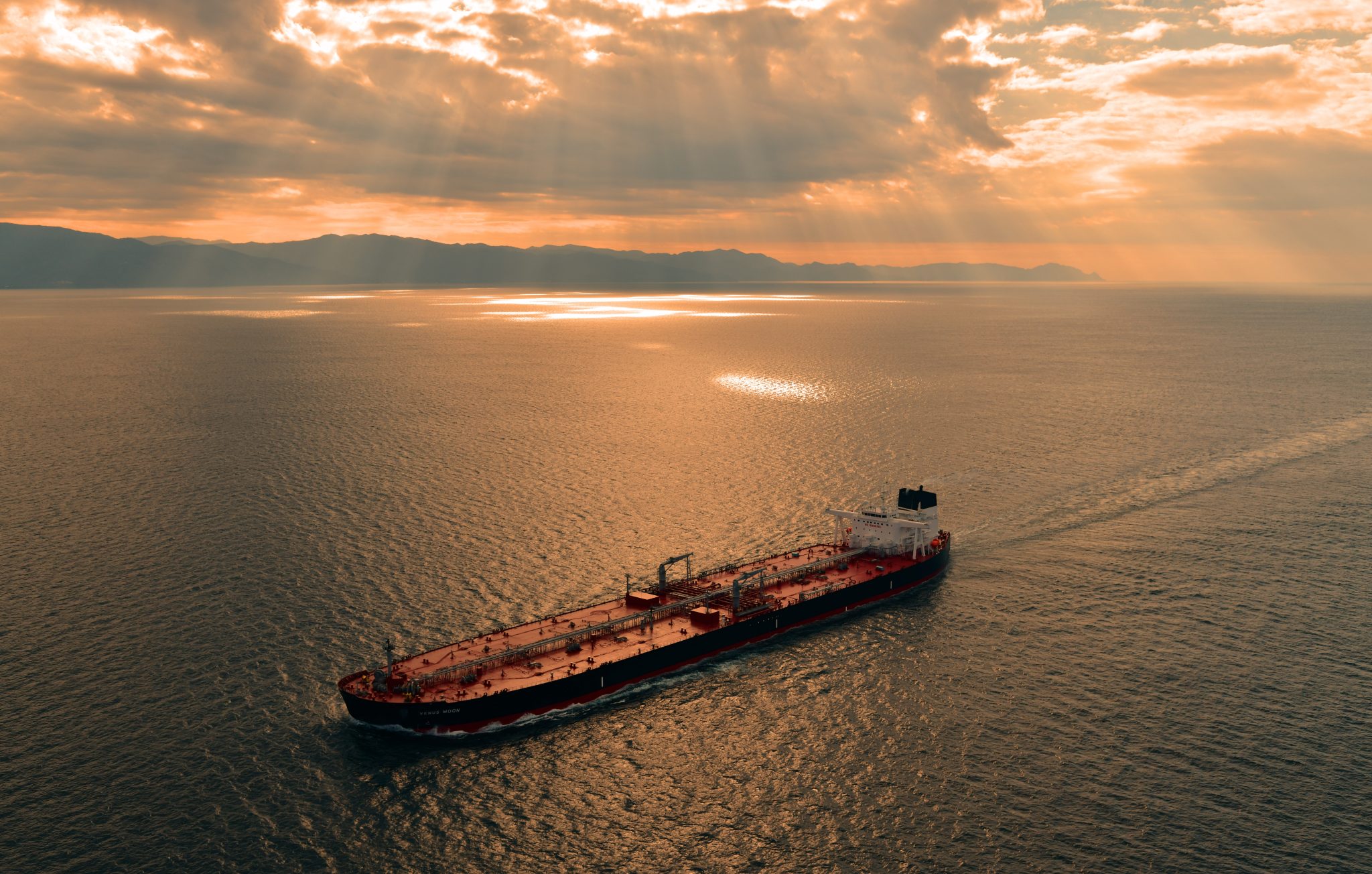
The message arrived overnight from Qingdao, written in careful English by a sourcing agent who signed himself Mr. Liang. He represented, he said, an independent refinery in Shandong province, one of the plants the industry calls teapots, and his client wanted Merey. He had seen vessel-tracking images of a lightering operation near Jose, with smaller tankers shuttling crude out to a larger vessel waiting offshore, and he wanted to know whether a cargo could be arranged.
The message reached Sofia Mendes, a facilitator who worked with crude buyers across several regions. She read it twice. It was polite, specific and commercially plausible. Before 2026, Chinese buyers had been major destinations for Venezuelan crude. Then she pulled up the U.S. Energy Information Administration's November analysis to remind herself how much had changed. According to the EIA, citing Vortexa data, most Venezuelan crude exports in 2025 went to China, but in 2026 Venezuela had exported no crude to China, and the United States had become the largest single destination by volume.
"Something structural changed," Sofia said to herself. "Before I talk about ships, I need to understand what."
The Question Behind the Enquiry
Sofia's firm, like the approach Moniphy describes publicly, worked on a verification-first basis: confirm the buyer's identity and capability, confirm the product side, execute protective agreements, and only then introduce. Here, though, the first verification question wasn't about funds or documents. It was about whether this transaction could lawfully happen at all for the parties who might be involved.
She opened OFAC's General License 46E, issued September 28, 2026. It authorizes certain transactions involving Venezuelan-origin oil by an "established U.S. entity," subject to conditions. Its exclusions are specific. Among other things, the license does not authorize any transaction involving an entity located in or organized under the laws of Venezuela or the United States that is owned or controlled, directly or indirectly, by or in a joint venture with a person located in or organized under the laws of the People's Republic of China. It also requires reporting when Venezuelan-origin oil is exported, re-exported, sold or supplied under the license to countries other than the United States.
Sofia was not a lawyer, and she didn't pretend to be. But she could see that a sale to a Shandong refinery would raise questions that no tracking image could resolve: who would be selling, whether any U.S. person or entity would be involved, how ownership chains would be assessed, and what reporting would apply. Those questions belonged with qualified sanctions counsel before anything else.
The Lightering Images
Mr. Liang's interest had been sparked by images of a lightering operation, a ship-to-ship transfer in which crude is moved from smaller vessels to a larger one, often because of draught limits at a terminal. Sofia understood the appeal. Lightering suggests volume and activity, and the images looked like the start of an export voyage.
But she also knew what those images couldn't establish. Automatic Identification System data shows positions, courses and speeds; the International Maritime Organization requires ships to keep AIS operating at all times except where navigational information needs protection. A ship-to-ship rendezvous visible on tracking data tells you two vessels met. It doesn't tell you who owns the cargo, under what authorization it moved, or where the barrels are legally allowed to go. In compliance terms, every transfer is also another custody event that needs documentation.
She wrote back to Mr. Liang. She thanked him, explained that any Venezuelan-origin transaction would first require identification of every party and a sanctions and licensing review, and asked for his client's full legal name, ownership information and the jurisdictions involved.
A Polite Withdrawal
The reply came two days later. Mr. Liang said his client preferred not to share ownership details at an early stage and asked whether the cargo could be arranged "through a third-country intermediary" to simplify matters.
Sofia had heard that phrase before. Sometimes it describes an ordinary trading structure; sometimes it describes an attempt to obscure who is actually buying. She didn't assume bad intent. Buyers have many reasons for discretion. But she couldn't proceed with a structure designed, even partly, to make parties harder to identify. Her answer was courteous and final: her firm could not facilitate any transaction where the parties couldn't be fully identified and screened, and could not advise on structures intended to avoid sanctions requirements.
"None of those were the first question. The first question was whether this transaction could legally existfor the parties involved."

Why This Is a Story About Process, Not Geography
It would be easy to read this episode as a story about Chinese buyers. Sofia saw it differently. The same discipline applies to a buyer in Houston, Rotterdam or Singapore. Every counterparty is identified. Every ownership chain is understood as far as the law requires. Every transaction is checked against the authorizations that actually apply rather than the ones a seller claims apply.
What made the Shandong enquiry instructive was how commercially reasonable it looked. The buyer existed, the demand existed, and the product was moving. If Sofia had led with ships, she might have spent a week arranging documents before discovering the transaction couldn't be done. Leading with the licensing question cost her one email.
The Cost of Leading With Ships
Sofia sometimes imagined the alternative version of the week. In that version, she would have answered Mr. Liang's enthusiasm with her own, requested product documents from a seller, arranged a call between the parties and begun discussing inspection timing. Only when counsel finally saw the file would anyone have asked who the buyer's owners were and whether the license permitted the transaction. By then, both sides would have shared sensitive information, an intermediary or two would have claimed fees, and the refusal would have felt like a betrayal rather than a principle.
Leading with the licensing question avoided all of that. It also protected Mr. Liang's client from investing time in a route that could not work for the parties involved. Good process is not only defensive. It is a courtesy to everyone who would otherwise waste effort on a transaction that was never available to them.
The Wider Shift
The EIA data told a bigger story than one enquiry. Flows that had once run largely to Asia had, in 2026, been redirected toward the United States as restrictions eased for U.S. purchases. Market participants who had built relationships around the old pattern were trying to understand the new one, and some offers circulating in the market still reflected outdated assumptions about who could buy and how.
For facilitators, that meant keeping current with primary sources, not market chatter. OFAC's Venezuela program page listed several general licenses that had been amended repeatedly over the year. A license summary that was accurate in spring could be wrong by autumn. Sofia made a habit of reading the current license text and dating her notes.
What She Told Her Team
At the next team meeting, Sofia used the Shandong enquiry as a teaching case. She didn't present it as a near miss, because nothing had been risked. She presented it as a demonstration of order.
"We had a real buyer, real ships and real demand," she said. "None of those were the first question. The first question was whether this transaction could legally exist for the parties involved. When we couldn't answer that, everything else was irrelevant."
One junior colleague asked whether they had lost a client. Sofia shrugged. "We didn't lose a deal. We avoided starting one we couldn't finish properly. That's not the same thing."
The license text went into the team's shared folder, with a date stamped on it and a note: check for amendments before relying on this.
Moniphy Energy & Commodities states that every transaction is subject to counterparty verification and applicable sanctions compliance. Learn more atmoniphy.com/energy-and-commodities.
Start a verification conversation
Moniphy Energy & Commodities states that every transaction is subject to counterparty verification and applicable sanctions compliance. Learn more at moniphy.com/energy-and-commodities.
Speak with a specialist: 1-800-390-1564
References
Moniphy Energy & Commodities (company positioning page):https://www.moniphy.com/energy-and-commodities
OFAC Venezuela General License 46E (Sept 28, 2026):https://ofac.treasury.gov/media/936996/download?inline
U.S. EIA, Today in Energy: U.S. crude oil imports from Venezuela (Nov 6, 2026):https://www.eia.gov/todayinenergy/detail.php?id=68425
International Maritime Organization: AIS transponders:https://www.imo.org/en/ourwork/safety/pages/ais.aspx
Moniphy Energy & Commodities acts solely as an independent facilitator; it does not take title to, store, transport or sell commodities, and makes no guarantee ofproduct availability, pricing or deal completion.
Keep reading:Seven Links Between a Buyer and a Barrel
Verify First. Then Trade.
Pre-qual in 24–48 hours. Soft pull only. No obligation — and approval is subject to lender review, never guaranteed.