

Home · Guide · Section 179
Guide · Section 179Will Your Next Purchase Actually Qualify? The Section 179 Equipment Checklist
Not everything a business buys counts for Section 179 — and finding that out after you have paid is an expensive way to learn. This page is a practical checklist of section 179 qualifying equipment: the categories that generally qualify, the categories that generally do not, and the four tests every purchase has to pass before any category matters at all.
Section 179 lets a business elect to deduct the cost of qualifying property in the year it is placed in service, instead of depreciating it over several years. For tax years beginning in 2026, the maximum deduction is $2,560,000, reduced dollar for dollar once total Section 179 property placed in service exceeds $4,090,000, with a separate $32,000 cap for heavy SUVs. Those limits only help if the equipment itself qualifies in the first place.
This is general information, not tax advice. Confirm current-year limits, your eligibility, and how your state treats Section 179 with your accountant or tax advisor before you rely on a deduction.
Pre-qual in 24-48 hours. Soft pull only — no impact on your credit to check.
The Four Tests Every Purchase Must Pass
Before you look at any list, run your purchase through these four tests from IRS Publication 946. If it fails one, the category does not save it.
- Acquired by purchase. The property must be bought in an arm's-length purchase. Property received by gift or inheritance does not qualify, and neither does a purchase from a related person — such as a spouse, ancestor, lineal descendant, or a company in which you own more than 50%.
- Used in the active conduct of a trade or business. Property bought for investment, or mainly to produce income outside an active business, does not qualify.
- More than 50% business use. In the year it is placed in service, business use must exceed 50%. If use is mixed, only the business share of the cost counts. If business use later drops to 50% or below during the recovery period, part of the deduction can be recaptured as income.
- Placed in service in the year claimed. The equipment must be delivered, installed where required, and ready and available for its intended use in that tax year. For a calendar-year business claiming for 2026, that deadline is December 31, 2026. Paying in December is not enough if the equipment is not ready until January.
One more limit sits behind all four: in general, the Section 179 deduction cannot exceed your business taxable income for the year or create a business loss. Amounts disallowed by that income limit can generally be carried forward.
Equipment That Generally Qualifies
Qualifying property is generally tangible personal property with a determinable useful life, plus off-the-shelf software and certain improvements to nonresidential real property. Common examples businesses finance every week:
Machinery and production equipment
- Manufacturing machinery — CNC machines, lathes, press brakes, welders, compressors
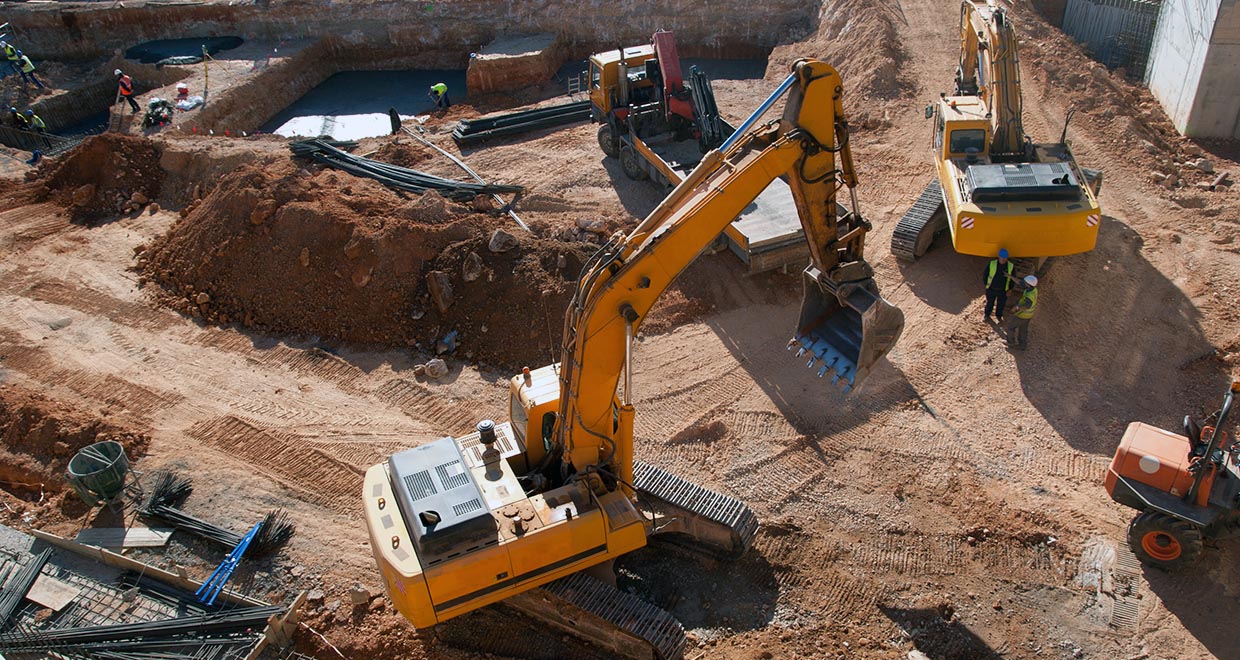
- Construction equipment — excavators, skid steers, loaders, cranes, generators, scaffolding owned for business use
- Agricultural equipment — tractors, combines, planters, irrigation equipment
- Material handling — forklifts, pallet jacks, conveyor systems
- Commercial equipment — printing presses, laundry equipment, car-wash systems, workshop tools and lifts
New or used both count. Used equipment qualifies if it is new to your business, bought from an unrelated party, and placed in service in the year claimed.
Business vehicles — with caps that matter
- Work trucks, cargo vans, and trailers used for business — generally qualifying, subject to the vehicle rules for their weight class
- Vehicles over 14,000 pounds GVWR and specialised work vehicles — such as ambulances, hearses, and clearly marked delivery or service vehicles — are generally outside the heavy SUV cap
- Heavy SUVs and certain other vehicles rated between 6,000 and 14,000 pounds GVWR — capped at $32,000 for 2026, whatever they cost
- Passenger automobiles — subject to separate, lower annual depreciation limits, not the SUV cap
Check the vehicle category, not just the price tag. Two vehicles at the same price can have very different Section 179 treatment.
Computers, technology, and software
- Computers, servers, networking equipment, and printers bought for business use
- Off-the-shelf computer software — software available for general purchase, subject to a licence, and not substantially modified for you. Custom-developed software follows different rules, so confirm it separately
- Point-of-sale systems, phone systems, and security hardware used in the business
Office furniture and equipment
- Desks, chairs, filing and storage systems, copiers, and other office equipment bought for business use
Certain improvements to nonresidential real property
If you elect to treat it as Section 179 property, qualifying real property can include:
- Qualified improvement property — interior improvements to a nonresidential building already placed in service, other than enlargements, elevators or escalators, or the building's internal structural framework
- Roofs placed in service after the building itself
- Heating, ventilation, and air conditioning (HVAC) systems
- Fire protection and alarm systems
- Security systems
The building itself does not qualify — only these improvement categories, and only when the timing and election rules are met.

Other commonly qualifying categories
- Livestock bought for business use, under the rules that apply to it
- Signs and other tangible business property with a determinable useful life
- Single-purpose agricultural or horticultural structures, where they meet the specific statutory tests
When a category is unusual — aircraft, vessels, or property with mixed personal use, for example — get an advisor's answer for that asset before you buy, not a general answer from a list.
Buying qualifying equipment this year? Timing is part of the deduction.
The equipment only counts for 2026 if it is placed in service by December 31, 2026. Financing it now can help you get it delivered and working before the deadline, without paying the full price in cash up front.
Get Your Equipment Financing QuotePre-qual in 24-48 hours. Soft pull only — no impact on your credit to check.
What Generally Does Not Qualify
- Land, and buildings themselves — other than the improvement categories above
- Inventory held for sale to customers
- Intangible property — patents, copyrights, trademarks, and goodwill
- Property received by gift or inheritance, or bought from a related person
- Property used mainly outside the United States
- Property used 50% or less for business in the placed-in-service year
- Property you lease to others in most cases, and property used by tax-exempt organisations or governmental units in most cases
- Property mainly used to furnish lodging, subject to specific exceptions — confirm before assuming
If an item is on this list, bonus depreciation does not automatically rescue it either. Ask which first-year write-off, if any, actually applies to that asset.
Financed Equipment: Does How You Pay Change Whether It Qualifies?
Generally, no — financing alone does not disqualify a purchase. What matters is ownership for tax purposes and the four tests above.
- Equipment loan. You own the equipment from the start. Subject to the rules above, this is the most straightforward structure for a Section 179 claim.
- $1-buyout lease (capital / finance lease). Generally treated as a purchase for tax purposes, because ownership effectively transfers for a nominal amount at term end. Businesses using it generally evaluate Section 179 as owners, with advisor confirmation.
- FMV lease (fair market value / operating lease). The lessor generally remains the owner and generally holds the Section 179 and depreciation benefits. You generally deduct your lease payments instead.
Tell your financing provider and your tax advisor that Section 179 is part of your plan before you choose a structure — two deals with similar payments can have completely different tax treatment.
Moniphy works on equipment purchases from $25,000 to $25 million or more, up to 100% financing, on terms of 24–84 months — equipment loans, $1-buyout leases, FMV leases, and sale-leasebacks, for new and used equipment from dealers, private parties, and auctions. Moniphy is an independent equipment finance broker, not a lender: applications go to lending partners, pre-qualification is typically available in 24–48 hours with a soft credit pull, 2+ years in business is preferred, 600+ FICO gives access to the best rates with programs available down to 550, and applications typically require 6–12 months of bank statements and an equipment quote or invoice. Approval, amounts, rates, and terms are decided by the lending partner and are not guaranteed.
A Quick Pre-Purchase Checklist
Before you sign, confirm each line:
- The item is in a qualifying category above — not land, a building, inventory, or an intangible
- You are buying it from an unrelated seller in an arm's-length purchase
- Business use will be more than 50% in the year it is placed in service
- It can be delivered, installed, and ready for use by your tax year-end — December 31, 2026 for calendar-year filers
- Your total Section 179 property for the year stays within the $2,560,000 limit and the $4,090,000 phase-out threshold, or you have planned for the reduction
- Vehicle purchases have been checked against the $32,000 heavy SUV cap or the passenger auto limits, as applicable
- Your expected business taxable income can absorb the deduction, or you have planned the carryforward
- Your tax advisor has confirmed the asset, the structure, and your state's treatment
For the full rules, limits, and a worked example, see our Section 179 guide for 2026, and run your own estimate with our Section 179 calculator before you confirm it with your advisor.
Get Your Equipment Financing Quote Today
Planning a qualifying purchase for 2026? Two clocks matter — the lender's and the calendar's. Get the equipment financed, delivered, and placed in service before your year-end deadline.
Prefer to talk? Call a live financing specialist at 1-800-390-1564
Equipment financing is provided through Moniphy's network of lending partners. All applications are subject to credit approval and program guidelines.
Get Your Equipment Financing Quote Today
Pre-qual in 24–48 hours. Soft pull only. No obligation — and approval is subject to lender review, never guaranteed.