

Home · Energy Stories · Nov 23, 2026 · 5 min read
Energy Stories · Nov 23, 2026 · 5 min readThe Proof of Product That Was Three Days Too Late
The document was real. The inspection was real. The cargo was gone. A genuine proof of product, checked three days after it stopped describing reality.
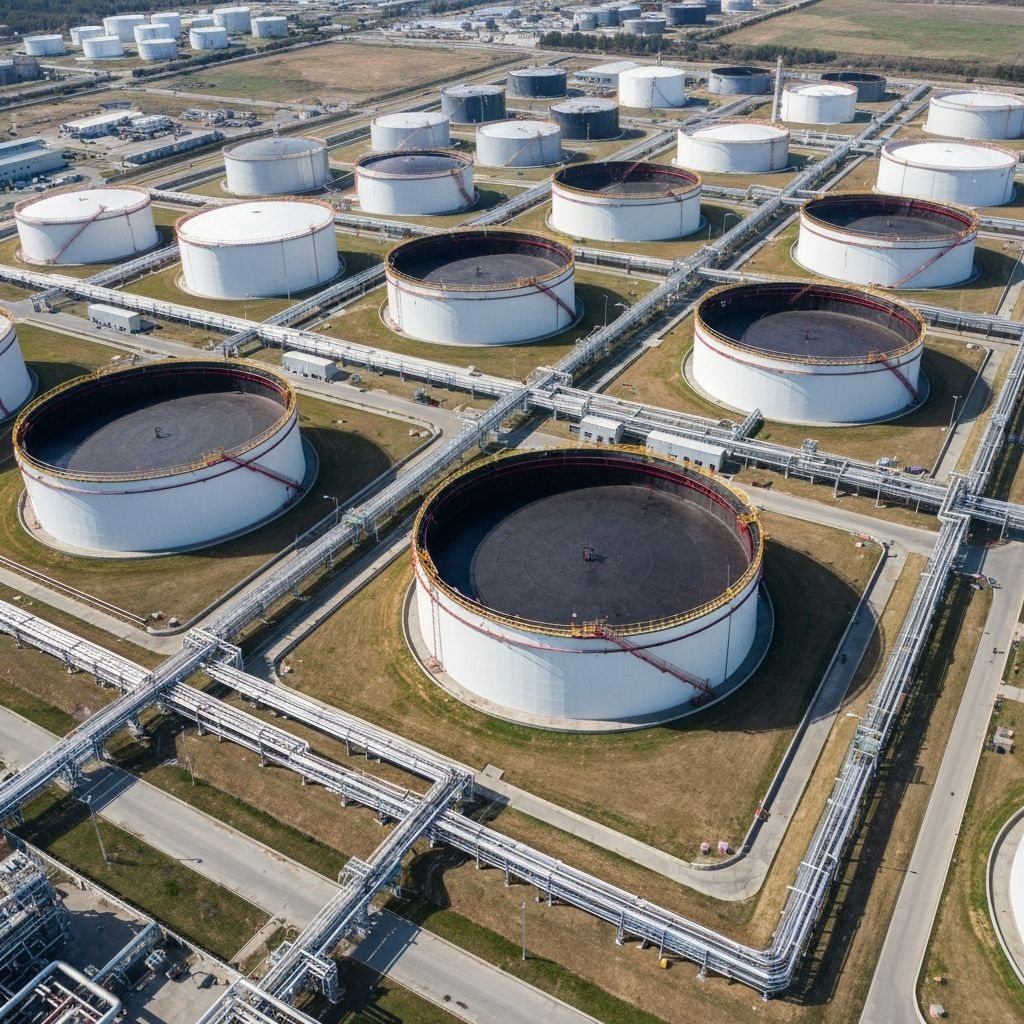
Marcus Delacroix ran supply for a regional fuel and asphalt distributor in southeast Texas, and the Boscan offer landed on his desk at 8:40 on a Tuesday morning.
- November 23, 2026 • 7 min read
Editor’s Note
Editor's note: The following is an illustrative scenario, not a report of a Moniphy transaction, client or verified vessel movement. People, companies, vessels and events are fictional. Moniphy Energy & Commodities acts solely as an independent facilitator; it does not take title to, store, transport or sell commodities, and makes no guarantee of product availability, pricing or deal completion. Nothing here is legal, sanctions or trading advice.
Marcus Delacroix ran supply for a regional fuel and asphalt distributor in southeast Texas, and the Boscan offer landed on his desk at 8:40 on a Tuesday morning. Boscan is a very heavy, high-sulfur Venezuelan crude prized by asphalt makers, and Marcus's company had a blending partner who had been asking for exactly that kind of barrel for months.
The package was immaculate. A Proof of Product file, the industry's shorthand for documents that are supposed to evidence that a cargo exists and that the seller controls it, contained a tank certificate, a quality report and a vessel nomination letter on letterhead. The letter named a tanker, which for this story we'll call the fictional Coral Meridian, and stated that it was alongside at Jose, ready to load for buyer nomination.
Marcus forwarded the file to his operations analyst, Priya Raman, with a one-line note: "Looks real. Can you sanity-check before I call them?"
Thirty Seconds on a Tracking Screen
Priya opened the company's commercial vessel-tracking subscription and typed in the ship's name. Tracking platforms built on Automatic Identification System data show a vessel's last reported position, its speed, its navigational status and a destination field entered by the crew. The International Maritime Organization requires AIS on most ships of 300 gross tonnage and upwards on international voyages, which is why tankers of this size are visible to anyone with a subscription.
The Coral Meridian was not at Jose. According to its reported track, it had left the terminal area three days earlier and was making steady speed northwest across the Caribbean, with a reported destination on another coast entirely.
Priya didn't conclude fraud from that alone. Tracking data has gaps, and vessel names are sometimes duplicated or misspelled. She checked the ship type and size against the nomination letter, compared the reported draught with what a laden tanker of that class would show, and looked at the vessel's recent port calls. Everything pointed the same way: the ship named in the documents had very likely already loaded and sailed, apparently for someone else.
How a Real Document Becomes a Fake Offer
When Priya walked Marcus through it, he asked the obvious question. "Why would anyone send a nomination for a ship that's already gone?"
The most common answer in physical commodities is that genuine information gets recycled. A real nomination letter, real tank certificate or real inspection report, from a real transaction, gets copied, re-dated or lightly edited and passed down a chain of intermediaries who present it as current availability. Sometimes the person forwarding it believes it. Sometimes they don't care. Either way, the buyer is being asked to act on a snapshot of a deal that belonged to someone else.
A tracking cross-check is useful precisely because it is independent of the sender. It cannot prove a document is genuine. A ship sitting at the right berth on the right day doesn't establish who owns its cargo or that the seller has the right to sell it. But a ship that is clearly somewhere else can disprove a document's central claim quickly. Priya summarized it in a sentence that Marcus later put on the whiteboard: "Tracking can't say yes. Sometimes it can say no."
The Seller's Response
Marcus decided to give the intermediary a chance to explain. He called and said, without accusation, that the named vessel appeared to have departed. The intermediary didn't hesitate. The documents were "from the last lift," he said, and a "sister cargo" was available on the same terms. He offered to send a new nomination within the day.
That response told Marcus more than the documents had. A genuine seller with a genuine cargo would normally correct the record by identifying the selling entity, the actual cargo and the inspection arrangements. Instead, the offer simply shape-shifted to fit the objection. The documents had never been evidence of availability; they were props.
Marcus thanked him and ended the call.
“Tracking can't say yes. Sometimes it can say no.”

Why Boscan Offers Attract This Pattern
Heavy Venezuelan grades sit in an unusual spot in 2026. The EIA reported in November that U.S. imports of Venezuelan crude rose sharply during the year after the U.S. government eased restrictions, with July imports averaging 701,000 barrels per day. Buyers who had not handled Venezuelan barrels in years were suddenly evaluating them, and interest from asphalt producers and heavy-crude refiners was strong.
New demand creates information gaps, and information gaps attract recycled paper. Many first-time buyers do not yet know which entities are authorized to sell, what licensing applies to them, or what normal documentation looks like for a given terminal. OFAC's General License 46E, for example, authorizes specific Venezuelan oil transactions by an established U.S. entity subject to conditions, and it expressly excludes transactions involving blocked vessels. A buyer who doesn't know those details is more likely to be impressed by a polished letterhead.
Marcus's company decided that any future Venezuelan offer would go to legal counsel for licensing review before operations spent time on documents. "If the transaction can't be legal for us, the paperwork doesn't matter," he told his team.
What Changed in Their Process
The episode cost nothing except a morning, which is the outcome good verification aims for. Afterwards, Marcus and Priya rewrote their intake process for unsolicited offers around a few principles.
First, they ask for the identity of the selling entity before anything else, because sanctions screening and licensing analysis start there. Second, they treat every vessel name in a document as a claim to be tested, not a fact. Third, they never issue a letter of intent, buyer's information or bank details on the strength of documents alone. Fourth, when a cross-check fails, they don't negotiate an explanation; they decline and log it.
Priya added a fifth practice that turned out to be the most useful: a short log of every unsolicited offer, recording the vessel names, letterheads, signatories and phone numbers that appeared in the documents. Within two months the log showed patterns. The same signature block appeared on paperwork for two different terminals. One phone number surfaced in three separate offers for three different grades. None of that proved wrongdoing on its own, but it gave the team a memory that individual intermediaries counted on them lacking. Recycled paper works best on buyers who see each offer in isolation.
They also learned to value a different kind of intermediary. A facilitator that verifies Proof of Product before introducing a seller, which is the approach Moniphy describes on its Energy & Commodities page, takes some of that screening upstream. That does not replace a buyer's own diligence, legal review or inspection arrangements, and no facilitator can guarantee that a cargo is available or that a deal will close. But it changes which offers reach the desk in the first place.
The Lesson in the Timestamp
What stayed with Marcus was how close he came to calling the seller with enthusiasm. The documents were better looking than most genuine paperwork he handled. The only flaw was time: three days between the ship's departure and the date on the letter.
In physical crude, the most convincing fakes aren't invented from nothing. They are real fragments, slightly out of place. The defense is a habit of asking one plain question about every document: Is this still true today, and can I confirm that without asking the person who sent it?
That question took Priya thirty seconds. It may have saved the company far more than a morning.
Before you commit to any procedure on a crude or product offer, ask for verification first. Moniphy's Energy & Commodities team explains its process atmoniphy.com/energy-and-commodities.
Start a verification conversation
If you are evaluating a crude or refined-product offer and want verification before any introduction, start a verification conversation through moniphy.com/energy-and-commodities.
Speak with a specialist: 1-800-390-1564
References
Moniphy Energy & Commodities (company positioning page):https://www.moniphy.com/energy-and-commodities
International Maritime Organization: AIS transponders:https://www.imo.org/en/ourwork/safety/pages/ais.aspx
Kpler: Maritime data, APIs & integrations (AIS fields):https://www.kpler.com/solutions/fundamental-intelligence/maritime-data
OFAC Venezuela General License 46E (Sept 28, 2026):https://ofac.treasury.gov/media/936996/download?inline
U.S. EIA, Today in Energy: U.S. crude oil imports from Venezuela (Nov 6, 2026):https://www.eia.gov/todayinenergy/detail.php?id=68425
Moniphy Energy & Commodities acts solely as an independent facilitator; it does not take title to, store, transport or sell commodities, and makes no guarantee ofproduct availability, pricing or deal completion.
Keep reading: What the Ping Doesn't Show: A Refinery Buyer's First Week Evaluating a Merey Offer
Verify First. Then Trade.
Pre-qual in 24–48 hours. Soft pull only. No obligation — and approval is subject to lender review, never guaranteed.