
Home · Energy Stories · Nov 25, 2026 · 7 min read
Energy Stories · Nov 25, 2026 · 7 min readSeven Links Between a Buyer and a Barrel: Anatomy of a Broker Chain
Seven intermediaries, no named seller — and a buyer who walked away. Inside the chain, every link took a margin and none of them could produce the seller.
The offer reached Tomas Lindqvist on a Thursday, and by Friday afternoon he had drawn it on a whiteboard as a row of boxes.
November 25, 2026 • 7 min read
Editor’s Note
Editor's note: The following is an illustrative scenario, not a report of a Moniphy transaction, client or verified vessel movement. People, companies, vessels and events are fictional. Moniphy Energy & Commodities acts solely as an independent facilitator; it does not take title to, store, transport or sell commodities, and makes no guarantee of product availability, pricing or deal completion. Nothing here is legal, sanctions or trading advice.
The offer reached Tomas Lindqvist on a Thursday, and by Friday afternoon he had drawn it on a whiteboard as a row of boxes. Tomas handled crude sourcing for a European trading house that had recently started looking at Venezuelan heavy barrels for resale into the U.S. Gulf Coast. The offer was for a Merey cargo out of Jose. The product, as far as he could tell, might well exist. The problem was everything standing between him and it.
The first box was the person who had emailed him, a consultant in Geneva. The second was the consultant's "partner" in Miami. The third was a "seller-side mandate" in Panama. After that the names grew vaguer: an "allocation coordinator," a "direct representative," a "family office with access." The seventh box was labelled only "source." Nobody in the chain would say who the source was."
How a Chain Forms
Tomas had seen chains before, and he understood why they form. In physical commodities, introductions are valuable. Someone who connects a buyer to a seller may be entitled to a fee, and that fee is typically protected by agreements such as an NCNDA, a non-circumvention and non-disclosure agreement, and an IMFPA, an irrevocable master fee protection agreement. Each intermediary wants to stay in the deal long enough to be paid, so each one guards the identity of the next party.
That logic, applied seven times, produces something like a game of telephone. Every link has an incentive to protect its position, and no link has an incentive to give the buyer what it needs most: direct access to the party that actually controls the cargo.
"I don't mind paying intermediaries," Tomas told his head of compliance, Ingrid Sahl, as they stood looking at the whiteboard. "I mind not knowing whom I'm paying, or for what."
What the Origin Data Showed, and Didn't
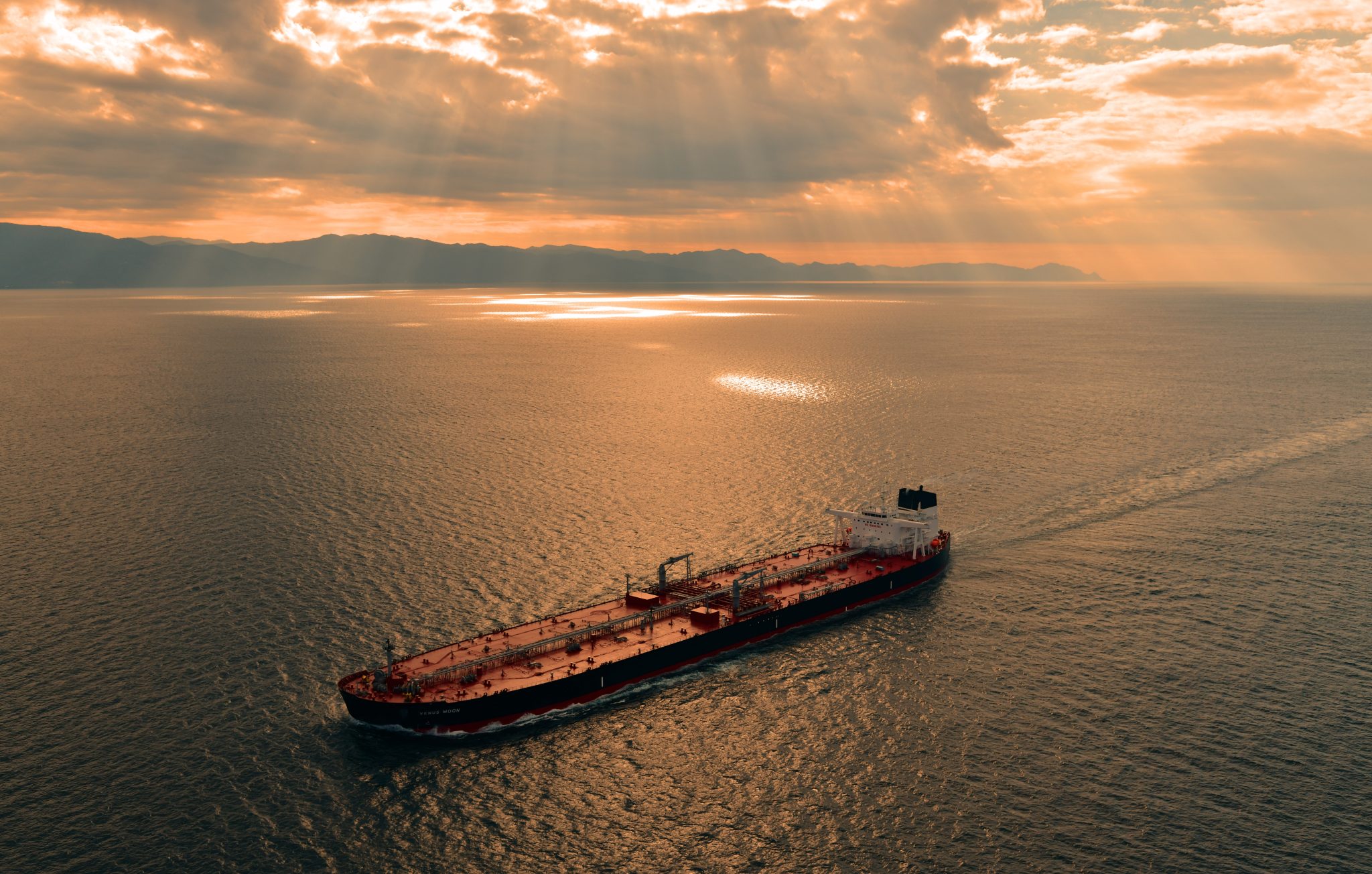
Tomas's analyst had checked vessel-tracking data. Ships were loading and leaving Jose; the market was active. One tanker that matched the offer's description in size and timing had sailed recently with a heavy draught. In that narrow sense, the offer's backdrop was real.
But Automatic Identification System data, which the International Maritime Organization requires on most international ships of 300 gross tonnage and upwards and which providers such as Kpler aggregate into position, destination, ETA and draught fields, tells you about the ship. It tells you nothing about the chain. A loaded tanker leaving the right terminal is entirely consistent with a seven-link chain in which none of the seven parties has any connection to that ship's cargo.
"The origin is visible," the analyst said. "The authority isn't."
Testing the Chain From the Top
Ingrid suggested a simple test. Rather than trying to climb the chain one link at a time, Tomas would ask the first link for documents that only the source could produce: the legal name of the selling entity, evidence of its right to sell this cargo, and the inspection arrangements. He would offer to sign an NCNDA with each intermediary first, so that nobody could claim he was trying to bypass them.
The answers came back over three days, each slower than the last. The Geneva consultant said the Miami partner would provide documents. The Miami partner said the Panama mandate had them but needed Tomas's company information first. Panama asked for a letter of intent on letterhead before revealing anything further. Nobody provided the one item that mattered, the seller's identity.
Meanwhile, the price drifted. The first email had quoted a discount to the benchmark. By the third exchange, the discount had narrowed, and a line had appeared noting that "commissions are on the buyer side." Tomas did the rough arithmetic. If each link was taking even a modest per-barrel fee, the chain could add a material cost to the cargo before it ever reached his books, and he had no way of knowing whether those fees were real, inflated, or simply invented to price him.
The Compliance Wall
Ingrid's concerns went beyond cost. Her company was considering U.S.-bound resale, which meant U.S. sanctions rules would shape what was possible. OFAC's General License 46E authorizes certain transactions involving Venezuelan-origin oil by an established U.S. entity, with specified conditions, and it excludes transactions involving certain persons and blocked vessels. Whether her firm, or its U.S. counterparty, could take part would depend on who the seller actually was and how the transaction was structured.
"I can't run a sanctions screen on the word 'source'," she said. "I can't assess license conditions for a party I can't name. If they won't tell us who's selling, the answer is no, not because we've found something wrong but because we can't check anything at all."
That distinction mattered to Tomas. He wasn't declining because the product was fake. He didn't know whether it was. He was declining because the structure made verification impossible.

Saying No Without Burning Bridges
Tomas wrote one email to the first link in the chain. He thanked the consultant, explained that his firm required identification of the selling entity and verifiable authority documents before proceeding, and said he would be glad to revisit the offer if the seller, or a mandate with documented direct authority, could engage directly under appropriate protective agreements.
He didn't hear back. A month later, a colleague at another firm mentioned receiving the same cargo description, with slightly different dates, from a different first link.
What a Shorter Path Looks Like
Over the following quarter, Tomas changed how his desk handled introductions. He began favoring facilitators whose stated model emphasized direct counterparty communication and verification before introduction. Moniphy's Energy & Commodities page, for example, lists "direct counterparty communication, no endless broker chains" among its transaction protections, alongside verifying Proof of Product before seller introductions and Proof of Funds before buyer introductions, and it states that the firm does not take title or act as principal.
Tomas was careful not to treat any facilitator's positioning as a guarantee. A short chain can still contain a bad actor, and verification by an intermediary doesn't replace a buyer's own legal, banking and inspection diligence. Nor can any facilitator promise a cargo will be available or a deal will close. But a short, transparent chain makes the questions answerable. That is the precondition for everything else.
"Every additional link adds cost, delay and distortion."
What It Cost to Find Out
Tomas later tallied the time the offer had consumed: three working days across his desk, his analyst and compliance, plus a handful of calls with people he would never hear from again. By the standards of physical commodities, that was cheap. He had colleagues who had spent weeks preparing banking arrangements and inspection bookings for chains that dissolved the moment money was supposed to move.
The cheapness was not luck. It came from refusing to advance a single step that the chain asked for before the chain provided something that could be checked. Each time an intermediary asked for a letter of intent or company documents, Tomas restated what he needed first. The chain never produced it, so the cost never grew. Had he sent a letter of intent on day one, his company's name would have travelled down all seven links and possibly beyond, attached to an offer he could not vouch for.
The Noise and the Signal
What Tomas took from the episode was a way of reading offers. The question he now asks first is not "Is the product real?" but "How many people stand between me and the party who can prove it is?"
Every additional link adds cost, delay and distortion. More importantly, every link is another place where accurate information can be replaced with something that merely sounds accurate. A tanker leaving Jose is signal. Seven boxes on a whiteboard, each guarding the next, are noise.
When the boxes can't be opened, the honest answer is to walk away and say why. That answer costs a deal that may never have existed. Ignoring it can cost much more.
If you want direct, verified counterparty communication rather than an endless chain, Moniphy Energy & Commodities describes its approach at moniphy.com/energy-and-commodities.
Start a verification conversation
Speak with a specialist: 1-800-390-1564
References
Moniphy Energy & Commodities (company positioning page):https://www.moniphy.com/energy-and-commodities
International Maritime Organization: AIS transponders:https://www.imo.org/en/ourwork/safety/pages/ais.aspx
Kpler: Maritime data, APIs & integrations (AIS fields):https://www.kpler.com/solutions/fundamental-intelligence/maritime-data
OFAC Venezuela General License 46E (Sept 28, 2026):https://ofac.treasury.gov/media/936996/download?inline
Moniphy Energy & Commodities acts solely as an independent facilitator; it does not take title to, store, transport or sell commodities, and makes no guarantee ofproduct availability, pricing or deal completion.
Keep reading: The Proof of Product That Was Three Days Too Late
Verify First. Then Trade.
Pre-qual in 24–48 hours. Soft pull only. No obligation — and approval is subject to lender review, never guaranteed.