
Home · Guide · Trucking
Guide · TruckingYour Truck Should Earn From Day One — Not Sit Waiting on Cash
For an owner-operator, a semi truck is not just equipment. It is the business. When the truck is down, parked, or never bought in the first place, there is no revenue to cover the payment you have not made yet — and no load to haul while you save up to pay cash.

That is why semi truck financing for owner operators exists as its own category. It is judged differently from a general business loan: the truck itself secures the deal, your driving and business record tells the lender how the truck will earn, and the structure has to fit the way freight actually pays — by the mile, by the load, and not always on a neat monthly cycle.
This guide explains how owner-operator truck financing works, what lenders actually look at, how new and used trucks are treated differently, and how to prepare an application that gives you a fair hearing. It is general educational information, not a guarantee of approval.
Moniphy, LLC is an independent equipment financing broker, not a lender or a bank. Credit decisions are made by third-party lending partners, and nothing here guarantees approval, a rate, an amount, or a timeline.
Pre-qual in 24-48 hours. Soft pull only — no impact on your credit to check.
How Semi Truck Financing Works for Owner-Operators
Semi truck financing is a loan or lease secured by the truck you are buying. You choose the truck — from a dealer, a private seller, or an auction — agree a price, and a lending partner funds the purchase, with the truck as collateral. You repay over an agreed term, and when the structure is a loan or a $1-buyout lease, the truck is yours at the end.
Through Moniphy's program, owner-operators can finance purchases from $25,000 to $25 million or more, with up to 100% financing and terms of 24–84 months, subject to credit approval. Structures include equipment loans, $1-buyout leases, FMV leases, and sale-leasebacks. Soft costs connected to the purchase can, in many cases, be rolled into the deal rather than paid separately out of pocket.
The process is built to move at the speed trucks sell. A good used tractor listed at a fair price does not stay listed while a bank committee meets for three weeks. Pre-qualification through Moniphy is typically available in 24–48 hours, starting with a soft credit pull only — a hard pull happens only if you decide to proceed.
Who Qualifies: What Lenders Look At
There is no single pass mark, and every lending partner weighs the file differently. In practice, an owner-operator application is judged on a combination of the following.
Time in business and driving record
2+ years in business is preferred. That can mean time as an owner-operator under your own authority, time leased on to a carrier, or verifiable time in the industry. Startup programs exist for owners with strong credit, but a shorter record usually means the rest of the file — credit, down payment, and the truck itself — has to carry more weight.
Personal credit
600+ FICO gives access to the best rates, with programs available down to 550, subject to credit approval. Lenders look beyond the score itself: recent late payments on vehicle or equipment obligations weigh heavier than an old medical collection, and a record of paying a previous truck or auto loan on time is direct evidence you will pay this one.
Cash flow and bank statements
Expect to provide 6–12 months of business bank statements. Underwriters are looking for steady deposits consistent with the work you describe, balances that do not sit at zero between settlements, and no pattern of returned items. If you are leased on to a carrier, settlement statements that support the deposit pattern strengthen the file.
The truck itself
The truck is the collateral, so its age, mileage, condition, and value matter as much as your paperwork. A lender will work from the equipment quote or invoice, verify the specification, and consider how saleable the truck would be if it ever had to recover it. Late-model tractors from major manufacturers with verifiable maintenance history are the easiest collateral to place. Older, very high-mileage, or highly specialised trucks are not automatically declined — but expect more questions and, in some cases, a larger down payment.
Down payment
Up to 100% financing is available through the program, so a down payment is not always required. In practice, putting money down helps an owner-operator file in three ways: it lowers the monthly payment, it lowers the amount the lender has at risk against a depreciating asset, and it signals commitment. First-time buyers, buyers with credit in the 550–600 range, and buyers choosing an older truck are the cases where a down payment most often makes the difference between a decline and an approval.
New vs Used Semi Trucks
Financing a new truck
A new tractor brings a full factory warranty, the latest fuel economy and emissions specification, and the longest useful life over which to spread payments — which is why new trucks can usually support the longest terms in the 24–84 month range. The trade-off is price and depreciation: a new Class 8 tractor loses value fastest in its first years, so the structure needs to keep the balance and the truck's value in a sensible relationship.
Financing a used truck
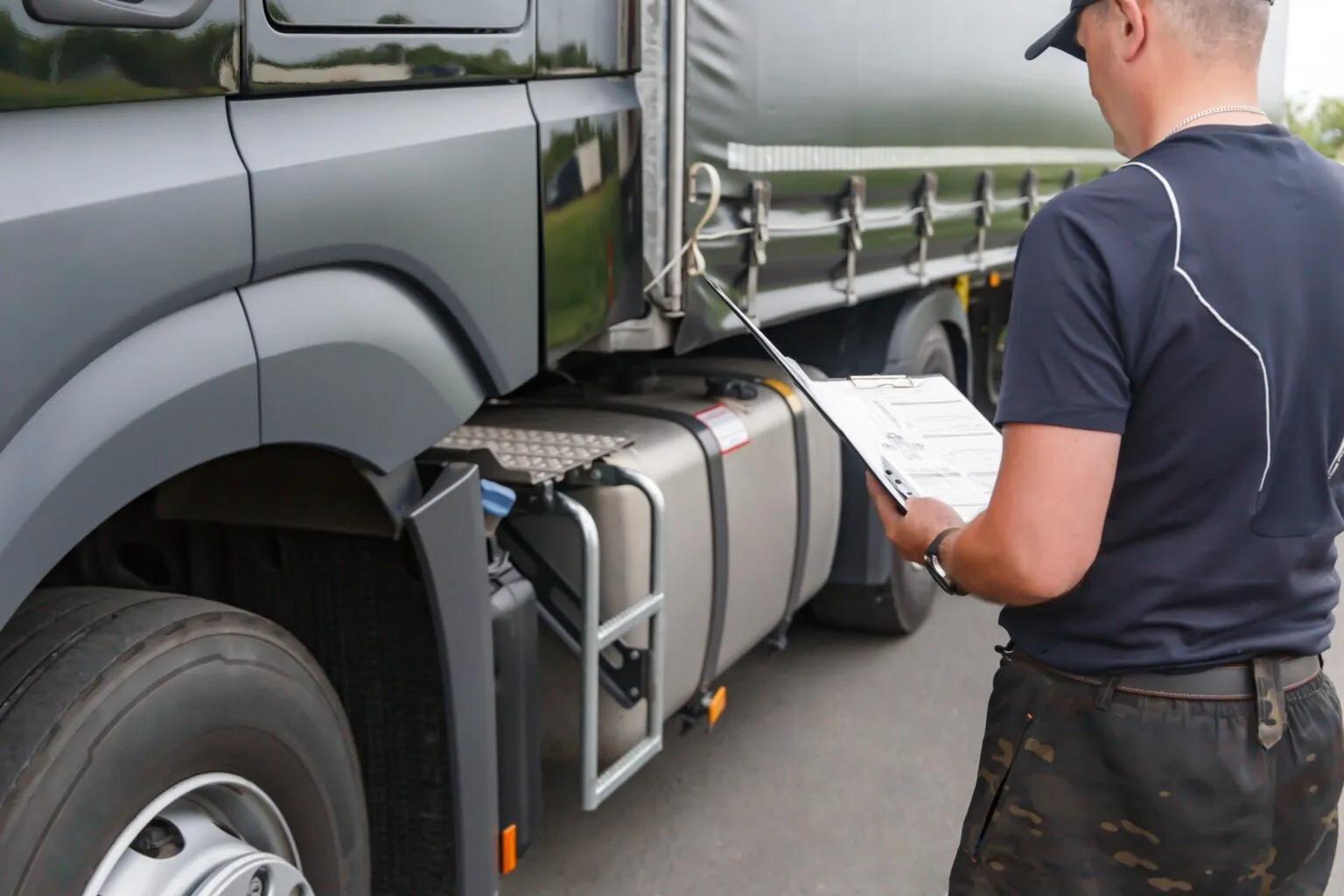
Used is where most owner-operators buy, and the program covers dealer, private-party, and auction purchases. A well-maintained used tractor can cost a fraction of new while still having years of working life left. Lenders will look harder at age, mileage, engine hours where relevant, and condition, and the term offered will reflect the truck's remaining life — the financing should not outlast the truck. Get an inspection on a private-party or auction truck before you commit: a cheap truck that needs an in-frame overhaul in month two is not cheap.
Whichever route you choose, do not let the financing term run past the work you realistically expect from the truck. Matching term to useful life is the simplest protection against owing more than the truck is worth.
Choosing a Structure: Loan, $1-Buyout, or FMV Lease
- Equipment loan: You own the truck from the start, build equity with every payment, and keep it at the end of the term. The simplest structure for an owner-operator who intends to run the truck for years.
- $1-buyout lease: Payments spread the full value of the truck over the term, and at the end you buy it for $1. Economically similar to a loan, sometimes with different tax or balance-sheet treatment — confirm the treatment with your tax advisor.
- FMV lease: Lower payments during the term, because you are paying for use rather than full value. At the end you can return the truck, buy it at its fair market value, or extend. This can suit an operator who prefers to cycle into newer equipment, but it is a poor fit if you plan to keep the truck long-term.
- Sale-leaseback: If you already own a truck outright, a sale-leaseback lets you release cash tied up in it while continuing to operate it, under a lease structure. Useful for funding a major repair, a second unit, or working capital — subject to the truck's value and your credit profile.
Tax treatment differs by structure and by your circumstances. Equipment purchases may qualify for Section 179 or bonus depreciation in the year the truck is placed in service, but whether and how much you can claim depends on your taxable income and the rules for that year. Treat any tax benefit as a reason to talk to your tax advisor early, not as a reason to buy.
Found the truck? Do not let someone else buy it while you wait on a bank.
Get a pre-qualification based on your full profile — credit, statements, and the truck itself — before the listing disappears.
Get Your Equipment Financing QuotePre-qual in 24-48 hours. Soft pull only — no impact on your credit to check.
What You Need to Apply
A complete application moves faster than a partial one. For most owner-operator deals, have ready:
- A signed application
- The equipment quote or invoice for the truck — year, make, model, mileage, and seller details
- 6–12 months of business bank statements
- Your CDL and, where relevant, proof of authority or your lease agreement with a carrier
- Settlement statements or income records that support your bank deposits, if you have them
- Business tax returns on larger deals, where the lending partner asks for them
You do not need every document perfect before you ask. A pre-qualification starts with the application, the truck details, and a soft pull, and it tells you where you stand before you spend money on inspections or deposits.
Common Mistakes Owner-Operators Make
- Buying the truck before checking the financing. A deposit on a truck you cannot fund is money at risk. Pre-qualify first, shop second.
- Judging the deal on the monthly payment alone. A longer term lowers the payment and raises the total cost. Compare total cost, term, and how long you will realistically run the truck.
- Hiding a weak spot. A past late payment, a thin month, or a prior repossession will surface in underwriting. Explained up front, it can often be worked with; discovered late, it damages trust in the whole file.
- Ignoring the running costs in the calculation. Insurance for a financed truck, maintenance, and tyres all compete with the payment. Leave a cushion — a payment you can only afford in your best month is a payment set up to fail in an ordinary one.
- Applying everywhere at once. Multiple hard pulls and scattered applications do not improve your chances. One broker working your file across a network of lending partners gives you the comparison without the scatter.
First-Time Buyers and Credit Challenges
Plenty of working drivers have credit in the 550s and 600s — a hard year, a medical bill, or a divorce can mark a file that no longer reflects how the business runs today. Programs through Moniphy's partners are available down to 550 FICO, subject to credit approval, and a strong truck, a down payment, and clean recent bank statements can support an application where the score alone would not.
First-time owner-operators coming from company driving should bring what evidence they have: verifiable driving history, settlement or pay records, and a clear statement of the work the truck will do — leased on to a named carrier, or under your own authority with identified customers. Lenders cannot fund a story, but they can fund a documented plan.
Get Your Equipment Financing Quote Today
If you have found the truck — or you know the specification you are shopping for — the next step is a real pre-qualification on real numbers. It costs nothing to check, and the soft pull leaves your credit untouched.
Prefer to talk? Call a live financing specialist at 1-800-390-1564
Equipment financing is provided through Moniphy's network of lending partners. All applications are subject to credit approval and program guidelines. Moniphy is an independent broker, not a lender.
Get Your Equipment Financing Quote Today
Pre-qual in 24–48 hours. Soft pull only. No obligation — and approval is subject to lender review, never guaranteed.