

Home · Guide · Section 179
Guide · Section 179Section 179 Guide 2026: Limits, Rules & Deadlines
Deduct the full cost of qualifying equipment in the year it is placed in service. The 2026 limits, the phase-out, the SUV cap — and why financed equipment can still qualify.

Deduct up to $2,560,000 of qualifying equipment in 2026 — but only if it is placed in service by December 31, 2026. Limits, qualifying equipment, deadlines and financing, explained.
Moniphy, LLC · November 2026
Pre-qual in 24–48 hours. Soft pull only — no impact on your credit to check.
Buying equipment for your business in 2026? The Section 179 deduction lets you deduct the full cost of qualifying equipment in the year it is placed in service, instead of spreading the deduction over five, seven, or more years of depreciation. That timing difference can materially change the after-tax cost of a truck, a machine, or a kitchen line you already need.
This guide covers the section 179 deduction 2026 rules: the limits, what qualifies, the placed-in-service deadline, how Section 179 compares with bonus depreciation, how financing interacts with it, a worked example, and the mistakes that cost businesses part of their deduction.
This is general information, not tax advice. Confirm current-year limits and your eligibility with your accountant or tax advisor.
What Is the Section 179 Deduction?
Section 179 of the Internal Revenue Code lets a business elect to expense — deduct immediately — the cost of qualifying property in the year it is placed in service, rather than capitalising it and depreciating it over its recovery period.
Three words do most of the work:
- Elect. It is a choice, claimed asset by asset on your return. If you do not elect it, normal depreciation applies.
- Qualifying. Only certain property counts. It generally must be used more than 50% for business, and acquired by purchase — not by gift or inheritance.
- Placed in service. The deduction belongs to the year the equipment is ready and available for its intended use, not necessarily the year you signed or paid.
Sole proprietors, partnerships, S corporations, C corporations, and LLCs can all use it. One key limit: in general, the deduction cannot exceed your business taxable income for the year or create a business loss, though amounts disallowed by that income limit can generally be carried forward.
Section 179 Deduction 2026 Limits and Phase-Out
For tax years beginning in 2026, the IRS figures in Revenue Procedure 2025-32 are:
- Maximum deduction: $2,560,000 — up from $2,500,000 in 2025, after inflation adjustment of the higher limits set by the One Big Beautiful Bill Act.
- Phase-out threshold: $4,090,000. The maximum is reduced dollar for dollar by the amount by which total Section 179 property placed in service during the year exceeds $4,090,000.
- Full phase-out: $6,650,000 ($4,090,000 + $2,560,000). Beyond that, no Section 179 deduction remains for the year — though bonus depreciation may still apply.
- Heavy SUV cap: $32,000 for sport utility vehicles and certain other vehicles rated between 6,000 and 14,000 pounds GVWR. Passenger automobiles are subject to separate, lower annual depreciation limits.
These are federal figures — some states set lower limits or do not follow bonus depreciation, so confirm state treatment too.
Example: place $4,500,000 of qualifying property in service in 2026 and you are $410,000 over the threshold, so your maximum deduction falls by $410,000 — from $2,560,000 to $2,150,000.
What Equipment Qualifies for Section 179?
Qualifying property is generally tangible personal property used in the active conduct of a trade or business, with a determinable useful life, purchased and placed in service during the tax year. Common examples:
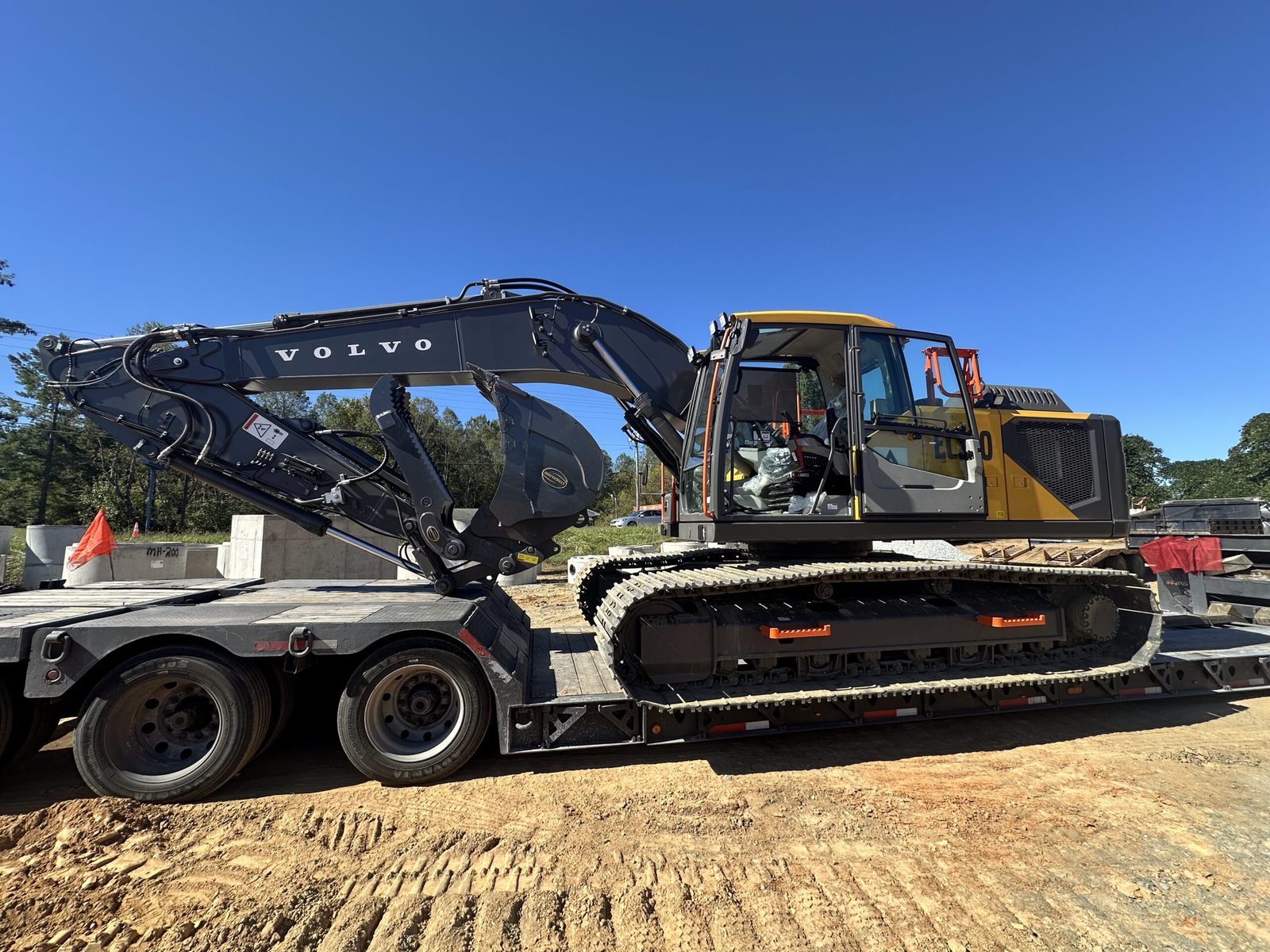
- Machinery and equipment — excavators, skid steers, cranes, forklifts, CNC machines, press brakes, commercial kitchen, dental and medical equipment — new or used
- Business vehicles — trucks, vans, and trailers, subject to the vehicle limits above; vehicles over 14,000 pounds GVWR and specialised work vehicles are generally outside the SUV cap
- Computers and off-the-shelf software bought for business use
- Office furniture and equipment
- Certain improvements to nonresidential real property placed in service after the building itself — roofs, HVAC, fire protection and alarm systems, and security systems
Generally not qualifying:
- Land, and buildings or other real property itself (beyond the improvement categories above)
- Property used mainly outside the United States, or by tax-exempt organisations or governmental units in most cases
- Property you lease to someone else in most cases, and property received by gift or inheritance
- Intangibles such as patents, copyrights, and goodwill
- Property used 50% or less for business — and if business use later drops to 50% or below during the recovery period, part of the deduction can be recaptured as income
Used equipment surprises people: it can qualify, if it is new to you, bought from an unrelated party in an arm's-length purchase, and placed in service in the year claimed.
Planning a qualifying equipment purchase this year? The deduction only counts if the equipment is placed in service by December 31, 2026 — financing it now can help you get it delivered, installed, and working before the year-end placed-in-service deadline, without paying the full price in cash up front.
The Placed-in-Service Rule and the Year-End Deadline
This rule decides more outcomes than any limit above: equipment must be placed in service in the tax year you claim. For a calendar-year business claiming the section 179 deduction 2026, it must be delivered, installed where required, and ready and available for its intended use by December 31, 2026.
Buying is not enough. Signing a contract, paying a deposit, or even paying in full in December does not place equipment in service. A machine still at the dealer's yard, in transit, or awaiting installation on January 1 belongs to the next tax year, whatever the invoice says.
- Lead times are tax planning. If the deduction matters for 2026, order and finance early enough for delivery and set-up inside the year.
- Keep records. Invoice, financing or payment documents, delivery proof, and evidence of when the equipment was ready for use are your answer if timing is questioned.
- Fiscal-year businesses use the last day of their own tax year, which may not be December 31.
Section 179 vs. Bonus Depreciation in 2026
Bonus depreciation under Section 168(k) is the other first-year write-off, and in 2026 it is powerful: the One Big Beautiful Bill Act restored 100% bonus depreciation, permanently, for qualified property acquired after January 19, 2025. Property acquired on or before that date — including under a written binding contract signed before January 20, 2025 — generally stays on the old phase-down schedule, so confirm your acquisition date with your advisor.
Key differences:
- Election vs. automatic. Section 179 is elective, asset by asset. Bonus depreciation generally applies automatically unless you elect out by property class.
- Dollar limits. Section 179 has the 2026 cap and phase-out above. Bonus depreciation has no comparable dollar cap or investment phase-out.
- Income limit. Section 179 generally cannot exceed business taxable income or create a loss (excess generally carries forward). Bonus depreciation can create or increase a loss, subject to the general loss rules.
- Scope. Section 179 covers some property bonus does not, notably the qualifying building improvements above. Bonus generally covers property with a recovery period of 20 years or less, plus certain other categories.
- States. Conformity varies widely, and many states do not follow federal bonus depreciation — which can flip which option suits you.
How Financing and Section 179 Work Together
You do not generally have to pay cash to claim Section 179. Financed equipment is still purchased property: if you own it (or are treated as the owner for tax purposes), buy it from an unrelated party, and place it in service during the year, financing does not by itself disqualify the deduction. That is why the two pair so well — you preserve cash, pay over time, and claim whatever first-year deduction your advisor determines you are eligible for when the equipment goes to work.
Structure matters, though:
- Equipment loan. You own the equipment from the start, on your balance sheet. Subject to the rules above, this is the most straightforward structure for a Section 179 claim.
- $1-buyout lease (capital/finance lease). Despite the word "lease," this is generally treated as a purchase for tax purposes — ownership effectively transfers for a nominal amount at term end. Businesses using it generally treat the equipment as owned and evaluate Section 179 accordingly, with advisor confirmation.
- FMV lease (fair market value / operating lease). The lessor generally remains owner. The business generally does not claim Section 179 or depreciation — the lessor generally holds those tax attributes — and instead generally deducts its lease payments. Neither outcome is automatically better; it depends on who can use the deduction more effectively and how payments compare.
Two deals with similar monthly payments can therefore have completely different tax treatment. If claiming the section 179 deduction 2026 is part of your reason for buying, tell your financing provider and your tax advisor before you choose a structure — not after.
Moniphy works on equipment purchases from $25,000 to $25 million or more, up to 100% financing, 24–84 months — loans, $1-buyout leases, FMV leases, and sale-leasebacks, for new and used equipment from dealers, private parties, and auctions. Moniphy is an independent equipment finance broker, not a lender: applications go to lending partners, pre-qualification is typically available in 24–48 hours with a soft credit pull, and approval, amounts, rates, and terms are decided by the lending partner and are not guaranteed.
Example: Section 179 on a Financed Equipment Purchase
This is a hypothetical example for illustration only. It is not a prediction of your deduction or tax saving, and it assumes facts that may not match yours.
A construction business has $400,000 of business taxable income before depreciation in 2026. In October it buys a used excavator for $180,000, finances the full amount, takes delivery in November, and has it working on site before year-end.
- The excavator is qualifying property, purchased and placed in service in 2026 and used entirely for business, so the business evaluates a Section 179 election for the full $180,000.
- That is well under the $2,560,000 limit, total purchases are well under the $4,090,000 phase-out threshold, and income is sufficient under the income limit.
- At a hypothetical combined marginal rate of 25%, a $180,000 deduction would correspond to roughly $45,000 of tax not owed on that income in 2026 — while the business paid only its initial financing payments in cash that year, not $180,000 up front.
Common Section 179 Mistakes
- Missing the placed-in-service deadline — equipment paid for in 2026 but not ready until 2027 is not a 2026 deduction.
- Assuming a lease qualifies — an FMV lease generally leaves ownership, and the deduction, with the lessor.
- Ignoring the income limit — electing more than your income can absorb does not create a loss; the excess generally carries forward.
- Forgetting vehicle caps — a heavy SUV is capped at $32,000 for 2026 whatever it cost; check the category, not the price tag.
- Letting business use drop to 50% or below — part of the deduction can be recaptured as income.
- Skipping state rules — federal eligibility does not guarantee the same state deduction.
- Buying equipment you do not need — a deduction never makes an unnecessary purchase free; the equipment must make business sense first.
- Not electing, or electing wrongly — Section 179 must be claimed on the return, and only on eligible property.
How to Claim Section 179
- Document each asset — what it is, its cost, when you acquired it, and when it was placed in service.
- Confirm eligibility with your tax advisor — property type, business-use percentage, vehicle category, income limit, phase-out, and state rules.
- Elect it on Form 4562, Depreciation and Amortization, filed with your timely business return (including extensions). Part I of Form 4562 reports the Section 179 election and the cost of elected property; the deduction then flows to your business return — Schedule C, Form 1065, Form 1120, or Form 1120-S, depending on your entity.
- Track basis and business use afterwards — carry the asset at its reduced basis, depreciate any remaining basis normally, and monitor business use for recapture.
Frequently Asked Questions
What is the Section 179 deduction limit for 2026?
$2,560,000 for tax years beginning in 2026. It phases out dollar for dollar once total Section 179 property placed in service exceeds $4,090,000, and is fully phased out at $6,650,000. A separate $32,000 cap applies to heavy SUVs.
What is the bonus depreciation percentage for 2026?
100% for qualified property acquired after January 19, 2025 — and, under current law, permanent. Property acquired on or before that date, including under an earlier written binding contract, generally follows the prior phase-down rates.
Does financed equipment qualify for Section 179?
Generally, yes. An equipment loan is still a purchase, and financing alone does not disqualify it if the other rules are met. A $1-buyout lease is generally treated as a purchase; under an FMV lease the lessor generally owns the equipment and holds the depreciation benefits, and you generally deduct lease payments instead.
Can I claim Section 179 on used equipment?
Generally, yes — if it is new to your business, bought from an unrelated party in an arm's-length purchase, and placed in service in the year claimed. Property received by gift or inheritance does not qualify.
What does "placed in service" mean, and what is the deadline?
It means the equipment is ready and available for its intended business use — delivered, installed if required, and capable of doing its job. For a calendar-year business claiming for 2026, the deadline is December 31, 2026. Paying in 2026 is not enough if it is not ready until 2027.
How much will Section 179 actually save me in tax?
It depends on your eligible deduction, your marginal tax rate, and your state's rules — no one can promise a specific saving. Illustration only: a $100,000 deduction at a hypothetical 25% marginal rate corresponds to about $25,000 of tax not owed on that income. Your advisor can calculate your actual figure.
What if my business income is too low to use the full deduction?
Section 179 generally cannot exceed business taxable income or create a loss; the disallowed portion generally carries forward to a later year. Bonus depreciation follows different rules and can generally create or increase a loss, which is why the two are often planned together.
How do I claim Section 179 on my tax return?
Elect it on IRS Form 4562, filed with your timely business return. Part I reports the election and the cost of property being expensed, and the deduction flows to your business return. Tell your preparer about the purchase before they start — not after they finish.
Get Your Equipment Financing Quote Today
Pre-qual in 24–48 hours. Soft pull only. No obligation — and approval is subject to lender review, never guaranteed.